


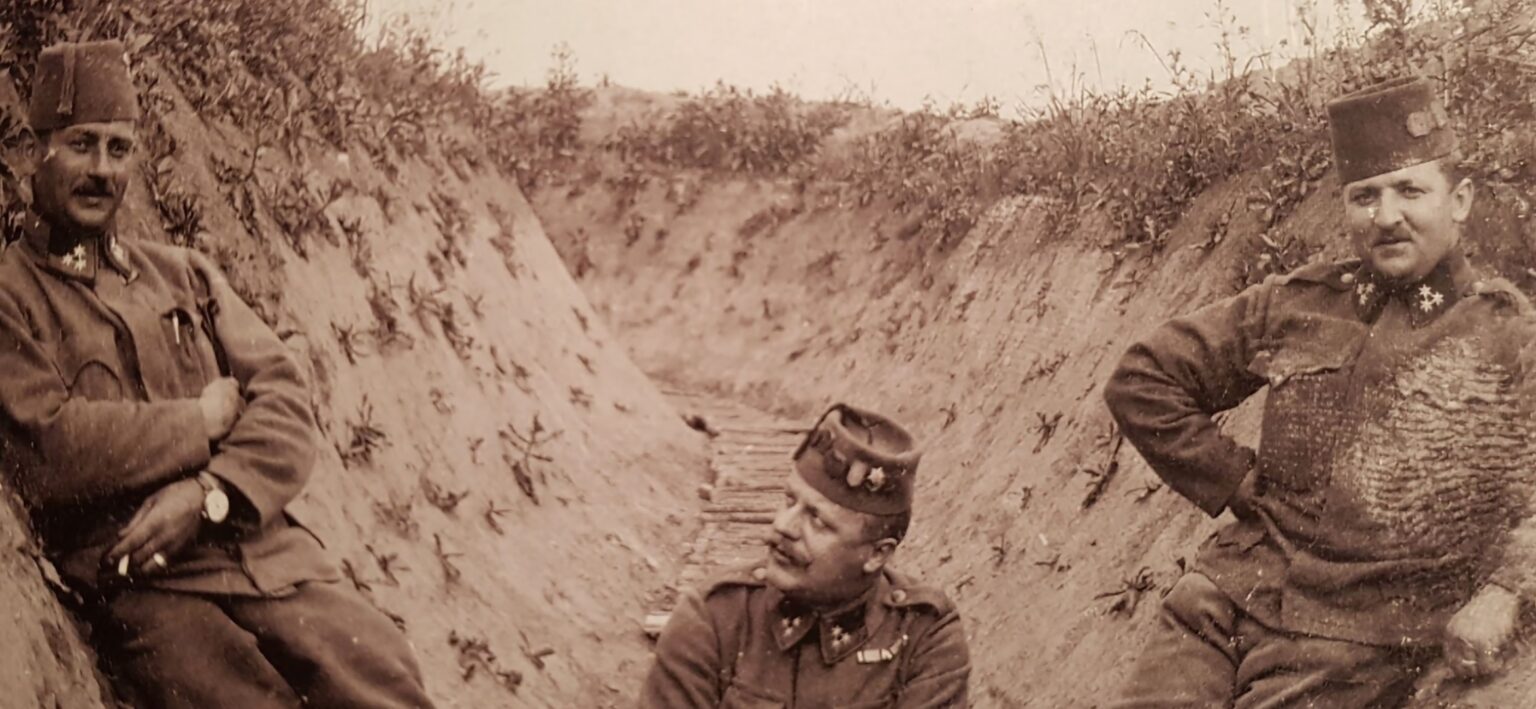

The Lower Piave Valley, a term that identifies the area of this territory, crossed by the river Piave, also known as “Sacro alla Patria”, was the scene of many wartime events. With some curiosities.
Immediately after the breakthrough of the front at Caporetto, in October 1917, the Austro-Hungarian 5th Army Isonzo Armee reached the course of the Piave river, establishing itself on the left bank of the river and all the way to the Adriatic coast. On the area between the mouth of Cortellazzo and Cavazuccherina (today’s Jesolo) one of the most picturesque 5th Army units was deployed: the Orientkorps. So called because it was originally intended to be deployed in Palestine, it was composed of soldiers from Bosnia-Herzegovina from the recruitment districts of Sarajevo, Mostar, Banja Luka and Tuzla. As the Austrian Official Report recalls, in 1918 the Orientkorps comprised four battalions, three of them of fearsome Bosnian-Herzegovinians … thoroughly trained in assault actions. Tough they wore the usual Austro-Hungarian uniform, these soldiers were distinguished by their use of the picturesque fez, a tapered headgear with no visor, to respect the Islamic religious dictates that they should be able to rest their foreheads on the ground during the five moments of daily prayer.